Large alpine mammals
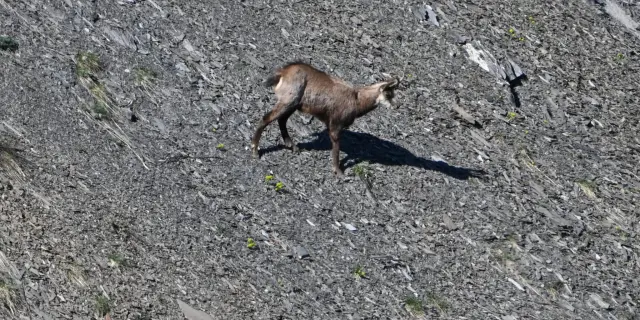
Chamois and ibex: agile and discreet, they roam the rocky slopes and sunny balconies, particularly visible at dawn or dusk.
Whatsapp Image 2026 04 30 At 16.07.23 3
Red deer, hinds and roe deer: found in the high altitude forests, they are a testament to the health of the forest environment.
Variable hare and fox: perfectly adapted to the contrasting seasons in the mountains.
Black squirrel: discreet and agile, it lives mainly in the spruce forests around Oz 3300, where it feeds on seeds and cones, playing an important role in forest regeneration.
The alpine marmot, sentinel of the mountain pastures An essential symbol of the mountains, the alpine marmot is one of the most easily observed animals around Oz 3300, particularly in spring and summer.
Living in colonies on sunny mountain pastures, they dig elaborate burrows where they take refuge and raise their young. A herbivore, the marmot feeds mainly on grasses, flowers and seeds, contributing to the natural balance of the meadows.
A life cycle closely linked to the seasons
Hibernation: from autumn to early spring, the marmot hibernates for several months, surviving on fat reserves built up during the summer.
Wake-up call in the mountain pastures: as soon as the snow melts, its characteristic whistling sounds resound on the slopes, a warning signal to predators.
Observe without disturbing
To preserve its tranquillity :
- Observe it from a distance,
- avoid feeding it,
- and remain discreet and silent.
The marmot plays an essential role in the Alpine ecosystem and is the perfect embodiment of the natural wealth of Oz 3300.
Mountain birds
Golden eagles, griffon vultures and bearded vultures fly over the valleys.
Black grouse and rock ptarmigan, sensitive species, remind us of the importance of respecting protected areas, particularly in winter.
Fish in the high altitude lakes around Oz 3300
Near Oz 3300, a number of high-altitude lakes are remarkable aquatic environments, where life adapts to demanding conditions: cold water, a long period of snow cover and a low supply of nutrients.
Lac Besson
Located on the plateau of lakes, Lac Besson is one of the best known. Its cool, well-oxygenated waters are home mainly to trout (fario trout and sometimes rainbow trout), a species that can withstand low temperatures and marked seasonal cycles. These fish play a key role in the biological balance of the lake.
Lac Carrelet
Smaller and more confidential, Lac Carrelet offers a more discreet but equally interesting natural environment. There are also populations of slow-growing trout here, a reflection of the high-altitude conditions. It’s a great place for birdwatching, in a calm, unspoilt setting.
Protecting fragile ecosystems
High altitude lakes are particularly sensitive to disturbance. It is essential to :
Respect the regulations in force,
avoid any introduction of species,
preserve the quality of the water and banks.
These aquatic environments add to the natural wealth of Oz 3300 and reflect the diversity of habitats found between forests, mountain pastures and high altitude wetlands.
A thousand colours of Alpine flora
Summer pastures
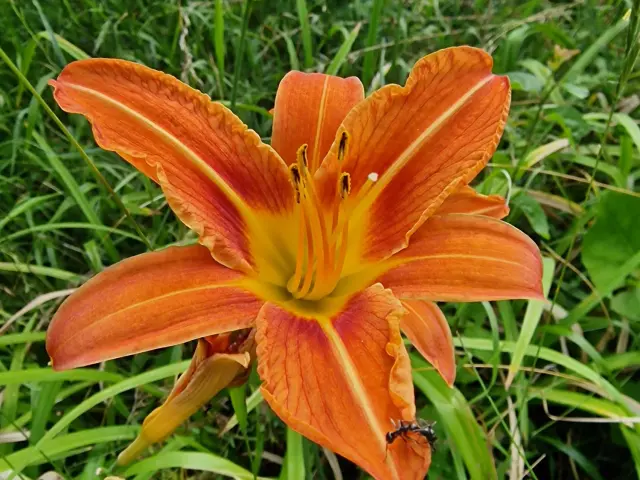
In spring and summer, the meadows are adorned with :
- gentians
- rhododendrons
- arnica
- martagon lilies.
These high-altitude flowers play an essential role for pollinating insects and contribute to the beauty of the landscape.
The mountain forest
Norway spruce: ~900 to 1800 m
Larch: ~800 to 2,300 m
White fir: ~800 to 1,600 m
Birch & ash: mainly between ~600 and 1400 m (edges, wetter areas)
They provide a haven for wildlife and contribute to the natural regulation of soil and water.
Adopting the right precautions in the mountains
To preserve this exceptional environment :
- Stay on the marked trails,
- Observe animals from a distance,
- keep dogs on a lead,
- bring in your rubbish,
- respect the quiet areas.